

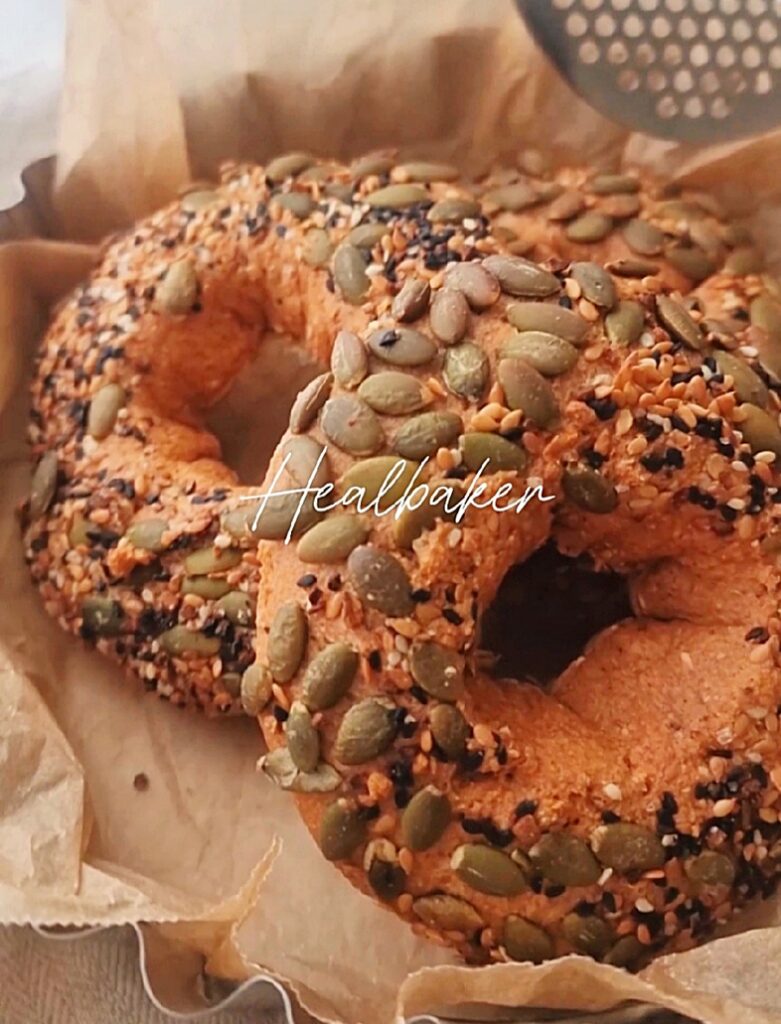
If you’ve ever baked gluten-free and thought “Why is it gummy… sandy… dry… or pale?”—you’re not failing.
Most of the time, the problem isn’t your oven. It’s your flour system.
Wheat flour behaves like a system: it builds structure, manages moisture, traps gas, and browns beautifully. Gluten-free baking can absolutely get close to wheat—but only if your gluten-free flour blend is designed to do wheat’s jobs on purpose.
And one more important point for my health-aware readers:
✅ A brown / whole-grain–leaning GF blend can be a smarter everyday default than the typical white rice–heavy blend, because it tends to bring more fiber and micronutrients—with a realistic, balanced approach to blood sugar and rice safety. Harvard Health+2The Nutrition Source+2
Table of contents
- What “bakes like wheat” really means
- The 4 building blocks of a wheat-like GF blend
- Why one “all-purpose” blend often disappoints
- Brown (whole-grain) vs white rice–heavy blends: real pros & trade-offs
- The 30-second blend picker (cookie vs muffin vs cake vs bread)
- Troubleshooting cheat sheet
- FAQ (with schema-ready Q/A)
✅What a Wheat-Like Gluten-Free Blend Really Means
When people say “I want GF baking that feels like wheat,” they usually mean:
- Not gummy in the center
- Not gritty on the tongue
- Soft but structured (slices, holds, doesn’t crumble instantly)
- Browns and smells like a bakery
To get that, your blend must deliver four functions—every time.
✅The 4 building blocks of a wheat-like GF blend
Think “jobs,” not ingredients.
1) Starches = lift + tenderness
Starches create lightness and that “bakery crumb.”
Too much starch → weak structure, collapse, gummy centers.
2) Proteins = structure + strength
Protein-forward flours help build framework.
Too much protein → dry, tough, sometimes bitter.
3) Fibers = moisture control + wheat-like bite
Fiber helps manage water so bakes don’t turn wet/gummy.
Too much fiber → dryness, “cardboard,” tight crumb.
4) Binders = elasticity + cohesion
Binders help replace gluten’s “hold.”
Too much binder → bouncy/gummy, tight texture.
Wheat-like GF baking = balance. Not one miracle flour.
The goal of a wheat-like gluten-free blend is simple: balance structure, moisture, and browning—without relying on one “magic” flour.
✅Why one “all-purpose GF blend” often disappoints
Cookies, cakes, and bread need different physics.
| Bake type | Needs most | What goes wrong with a one-blend approach |
|---|---|---|
| Cookies | controlled spread + crisp edges | puffy/cakey, or oily spread |
| Muffins | moisture retention + tenderness | gummy middle or dry crumble |
| Cakes | fine crumb + soft structure | gritty, dense, poor rise |
| Bread | gas trapping + elasticity + strength | collapse, gummy line, dense bottom |
That’s why I use type-specific blends (cookie / muffin / cake / bread) instead of forcing one blend to do everything.
✅Brown (whole-grain) vs white rice–heavy blends: the real story
Most mainstream GF blends rely heavily on refined starches + white rice flour because they’re mild and predictable.
A brown / whole-grain–leaning base can be a smarter default if your goals include:
- better everyday nutrition direction
- better satiety
- a stronger “health-forward” story—without sacrificing joy
Benefit #1: More fiber + micronutrients (bran & germ remain)
Brown rice is a whole grain and generally provides more fiber and minerals than white rice. The Nutrition Source+1
Practical baking upside: when balanced well, that fiber can support moisture management and “real-food” satisfaction.
Benefit #2: Blood sugar impact is often gentler—but not guaranteed
Harvard Health notes typical GI ranges show white rice ~73±4 (high GI) and brown rice ~68±4 (medium GI). Harvard Health
But here’s the honest nuance:
A meta-analysis of trials in prediabetes and type 2 diabetes found that swapping brown rice for white rice did not consistently change HbA1c or fasting blood glucose across studies (though there were other potential benefits like HDL/weight in some trials). PubMed
Brown/whole-grain direction is a better default, but your total recipe design + portion + what you eat it with matters just as much.
Benefit #3: Whole grains are linked with lower CVD risk (big-picture evidence)
Large meta-analyses of prospective studies associate higher whole-grain intake with lower cardiovascular disease risk. BMJ+1
That’s why “brown/whole-grain-leaning” fits naturally with a cardio-aware baking philosophy.
Rice safety note (arsenic)
- Arsenic tends to accumulate more in the outer layers of the grain, which is why brown rice can contain higher inorganic arsenic than white rice. The Nutrition Source+2PMC+2
- FDA documents also discuss that cooking rice in excess water can reduce inorganic arsenic (with trade-offs like nutrient loss for enriched rice). U.S. Food and Drug Administration+2PubMed+2
My practical approach (simple and non-alarmist):
- Rotate grains/flours (don’t make rice your only base every day) The Nutrition Source+1
- Build blends that diversify flours (which is another reason a “blend system” beats one all-purpose mix)
- Be extra conservative for kids/pregnancy (more variety, less rice reliance)
Quick comparison graph
Brown/whole-grain base: Nutrition direction ██████████ | Neutral taste ██████
White rice–heavy base: Nutrition direction ██████ | Neutral taste ██████████ Harvard Health+1
✅How to Choose a Wheat-Like Gluten-Free Blend (30-Second Picker)
Once you understand the logic, choosing a wheat-like gluten-free blend becomes easy: cookies, muffins, cakes, and bread each need a different flour system.
Step 1) What are you baking?
- Cut-out / Shortbread, Drop Cookies / Chewy, Bars & Cracker & Biscuit → cookie blend
- Muffin ,Cupcakes / Mini Cakes, Breakfast-style Bakes → muffin blend
- Sponge / Layer Cakes, Bundt / Pound / Snack Cakes,Soft Dessert Cakes → cake blend
- Sandwich & Everyday Bread, Rustic / Artisan-style, Flatbreads & Pizza → bread blend
Step 2) What’s your priority today?
- Closest to wheat taste/texture → choose your “Brown/whole-grain” system
- More cardio/prediabetes-aware → choose your metabolic-friendly system
Step 3) The biggest mistake check
If you use a cake blend for bread, you often get collapse + gummy line + dense bottom—because bread needs much more elasticity and gas trapping.
Wheat-like blend checklist (save this)
- Balance: starch + protein + fiber (not mostly starch)
- Binder strategy matches the bake (bread ≠ cookie)
- Batter/dough rested enough to hydrate fibers
- Baked long enough and cooled fully (GF sets while cooling)
- Measured by weight, not cups
Two practical examples
Example 1 — Muffins
A brown/whole-grain-leaning muffin blend often tastes more “real bakery,” but may benefit from:
- a slightly longer rest (fiber hydration)
- full cool before slicing (prevents “wet center” confusion)
Example 2 — Cookies
Cookies are spread physics.
A brown base boosts flavor, but you must balance:
- structure vs fat vs starch
Too much fiber/protein → thick and dry.
Too much starch/fat → oily spread.
✅Troubleshooting cheat sheet (5 classics)
1) Gummy center
Usually: too much starch/binder, underbaked, sliced warm
Fix: bake longer + cool fully; next test slightly reduce binder or adjust hydration
2) Dry & crumbly
Usually: fiber/protein too high, not enough moisture strategy
Fix: add moisture support; rest batter longer
3) Sandy/gritty
Usually: coarse grind + not enough hydration time
Fix: rest 15–30 min; use finer grind for cakes/muffins
4) Pale / no browning
Usually: weak browning inputs + short bake
Fix: tweak browning strategy (small changes can help)
5) Dense bread
Usually: wrong blend type, weak structure, proofing issues
Fix: bread-specific blend + correct hydration range + proper proof/bake
✅FAQ
1) Is there one “best” gluten-free flour blend?
There’s no single best blend for everything. Cookies, cakes, and bread need different structures—type-specific blends usually give the most consistent, wheat-like results.
2) Is a brown rice flour blend always healthier than a white rice blend?
Often it’s a better default because it’s whole-grain aligned and tends to contain more fiber and micronutrients—but “healthier” still depends on the overall recipe, portion, and what you eat it with. The Nutrition Source+2PubMed+2
3) Is brown rice always lower GI than white rice?
Not always, but typical comparisons show brown rice is often lower GI than white rice. Processing and particle size can change the result. Harvard Health
4) Should I worry about arsenic if I use rice-based GF blends?
Rice can contain inorganic arsenic, and brown rice can be higher than white rice because arsenic concentrates in outer layers. The practical approach is rotation and variety; cooking rice in excess water can reduce inorganic arsenic. PMC+3The Nutrition Source+3U.S. Food and Drug Administration+3
5) Do I need xanthan gum or psyllium?
Not always—but you do need a binding strategy. Bread typically needs more elasticity support than cookies or cakes.
6) Why is my gluten-free bread gummy on the bottom?
Common reasons are too much starch/binder, underbaking, or slicing too soon. Bake fully and cool completely, then adjust hydration/binder in small steps.