190°C / 374°F for 18 minutes

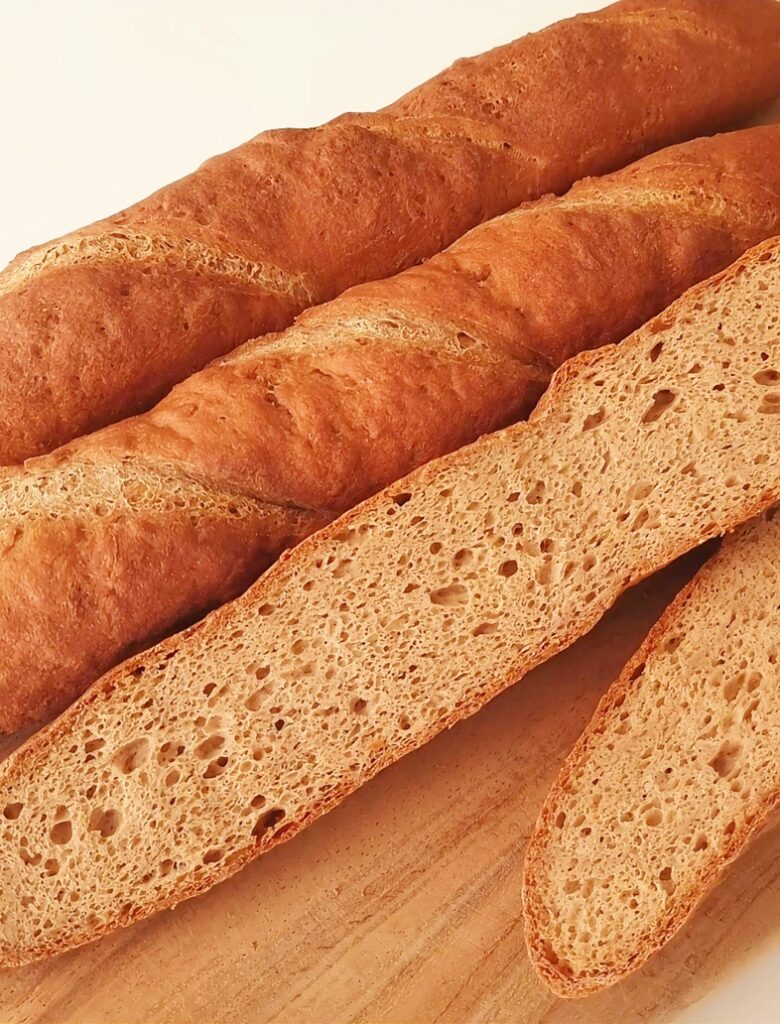
Note: Everyone’s glucose response is individual. This blood-sugar–friendly gluten-free baguette is designed to be more fiber- and protein-forward than many starch-heavy gluten-free breads, but it’s not medical advice. If you manage diabetes or prediabetes, use your meter/CGM and follow your clinician’s guidance.
Hello, fellow bread lovers. If you’ve ever searched for a gluten free baguette recipe that doesn’t bake up dense or gummy, you’re not alone.
I wanted a crispy gluten free baguette with an airy gluten free baguette crumb—without relying on a starch-heavy base.
Many online gluten-free baguettes can feel “rice-cake-like” or depend heavily on refined starches—something that may not match blood-sugar goals.
So I created this: a high protein high fiber gluten free baguette blueprint that aims to mimic the real baguette experience—crisp outside, airy inside.
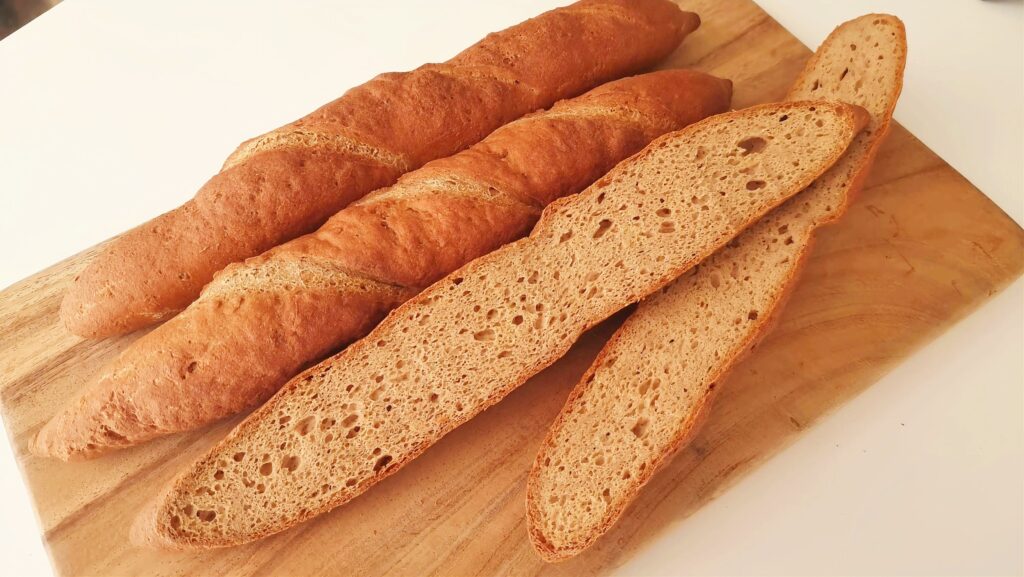
Store-bought mixes can be convenient, but for a blood sugar friendly gluten free baguette, they often miss the mark.
My goal was to create a high protein, high fiber gluten-free baguette with a more balanced “everyday bread” feel—so you can enjoy toast or sandwiches with more confidence.
A classic baguette relies on gluten. In a psyllium husk gluten free bread approach, psyllium creates an elastic gel network, while xanthan gum helps stabilize gas bubbles so the dough can rise and hold shape.
High-fiber and high-protein flours absorb a lot of water. This gluten-free baguette recipe uses higher hydration so the crumb stays moist, flexible, and less brick-like.
Because this recipe doesn’t rely on sugar, apple cider vinegar helps soften “beany” notes (common in legume-based blends) and supports a more open, airy crumb.
| Ingredient | Amount | Role |
|---|---|---|
| Lukewarm water | 540g | Hydration |
| Extra virgin olive oil | 12g | Softens crumb |
| Apple cider vinegar | 10g | Flavor + supports airy crumb |
| Salt | 8g | Flavor balance (heart-minded version) |
| Dry yeast | 9g | Rise |
| Ingredient | Amount | Role |
|---|---|---|
| Lupin flour | 84g | High-protein base (lupin flour bread recipe component) |
| Oat fiber | 84g | High fiber; helps a lower-starch approach |
| Tapioca starch | 105g | Elasticity + lighter texture |
| Brown rice flour | 33.6g | Flavor base |
| Millet flour | 42g | Softness |
| Sorghum flour | 25.2g | Body + structure |
| Buckwheat flour | 4.2g | Flavor depth |
| Psyllium husk powder | 37.8g | Main structure builder |
| Xanthan gum | 4.2g | Stabilizes air pockets |
Whisk all dry ingredients until completely uniform. This matters most for psyllium husk powder and xanthan gum—even distribution prevents uneven gumminess and helps an airy gluten free baguette crumb.
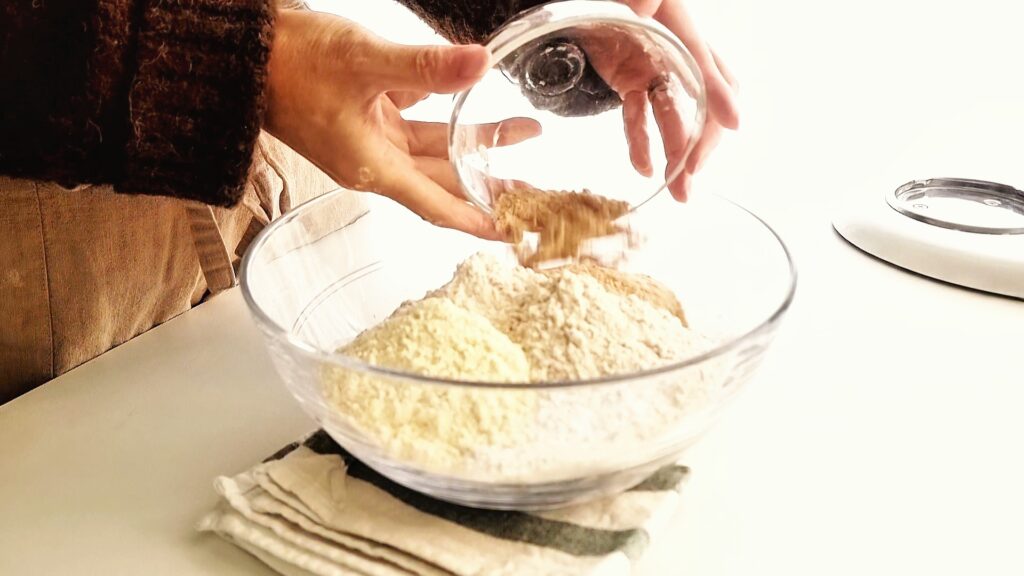
Combine liquids with the dry bowl and mix until fully hydrated (about 3 minutes in a stand mixer, or until smooth by hand). You’re not kneading for gluten—just building a well-hydrated dough for this gluten free baguette recipe.
First rise target: about 1.4–1.6× volume increase.
Divide into 3 pieces (about 330–335g each), cover, and rest for 10 minutes to relax the dough before shaping.
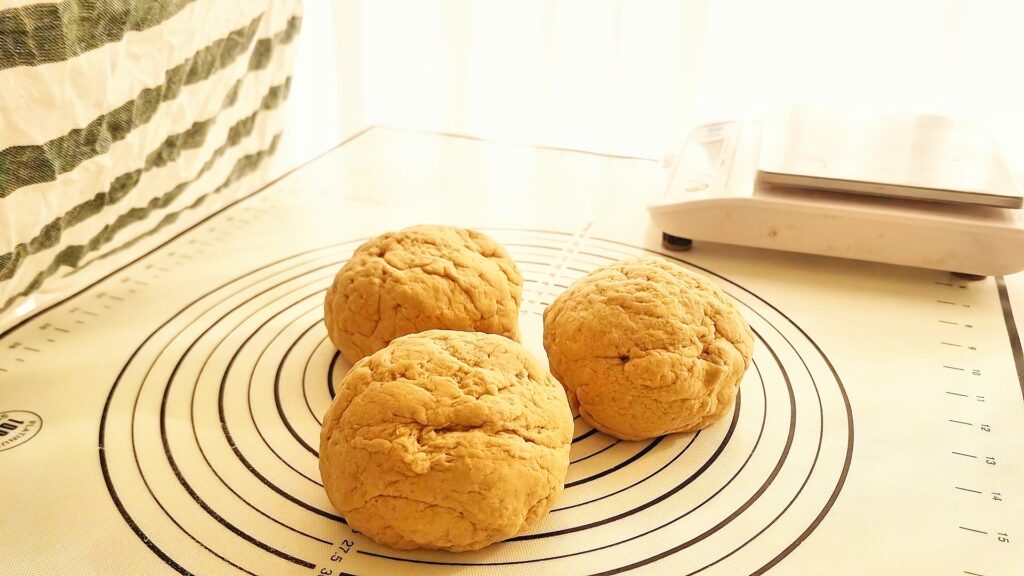
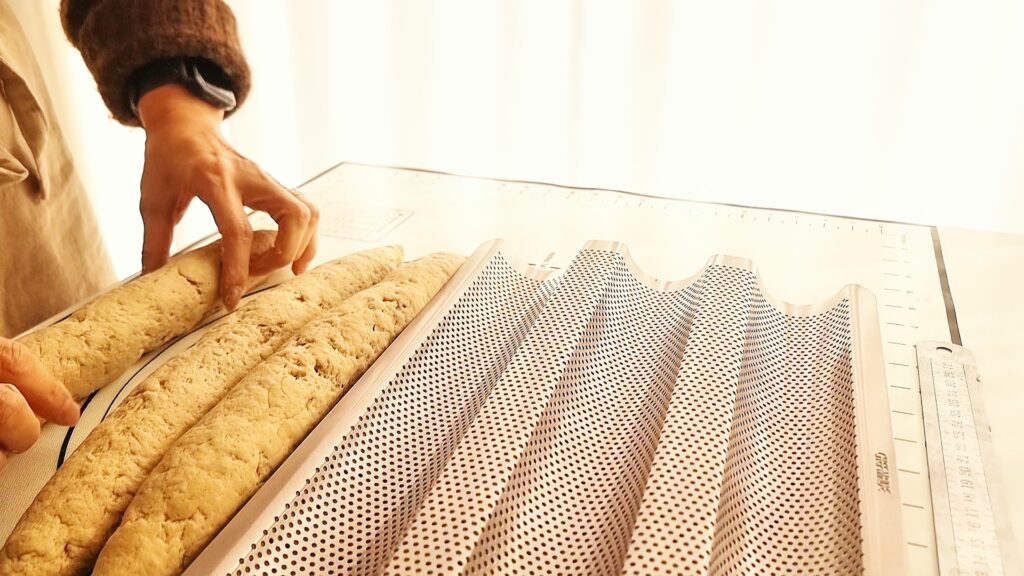
With lightly oiled or wet hands, shape into baguettes (about 32cm). Proof until ready.
Score each baguette immediately before it goes into the oven. Use a sharp lame/razor (or a very sharp knife) and make 3–4 diagonal slashes at a 30–45° angle, about 0.5–1 cm (¼–½ in) deep.
Goal: scoring controls where the loaf expands, improves oven spring, and creates a cleaner, more baguette-like crust.
Pro tips:
If the surface is sticky, lightly oil the blade or dip it in water between cuts.
Score with quick, confident strokes—hesitation can drag the dough.
If the loaf is over-proofed, score more gently and slightly shallower to avoid collapse.
A blazing-hot oven is key for a crisp gluten-free baguette crust and strong oven spring—and a burst of steam at the start helps keep the surface flexible for better expansion.
No steam pan? Here are easy options:
Preheat a small metal tray: Place a small, empty metal tray (or loaf pan) on the lower rack during preheat. Right after you load the baguettes, carefully pour ½ cup / 120 ml of boiling water into the hot tray and close the door quickly.
Use a preheated cast-iron skillet (best steam): Preheat a cast-iron skillet on the bottom rack. Add boiling water immediately after loading the bread.
Important: Avoid spraying water directly onto the oven light/glass. Always use boiling water and work quickly to keep heat in.
Vital note: Cool at least 1 hour before slicing—cutting early can make the crumb feel gummy.
Gluten-free baking doesn’t have to mean giving up baguette joy. I hope this blood sugar friendly gluten free baguette brings real bread energy back to your kitchen.
If you bake it, leave a comment with your proofing notes and oven behavior—your data helps me refine this gluten free baguette recipe even further.
Happy baking,
HealBaker
This gluten-free baguette is designed for a crisp crust and airy crumb—without relying on a starch-heavy base. Built with a high-protein, high-fiber blend (lupin + oat fiber) and structured with psyllium + xanthan, it follows a lower-carb approach for everyday balance. Finished with a 3-stage bake (spring → set → dry) for a crunchy, non-soggy crust.
Score each baguette immediately before it goes into the oven. Use a sharp lame/razor (or a very sharp knife) and make 3–4 diagonal slashes at a 30–45° angle, about 0.5–1 cm (¼–½ in) deep.
Goal: scoring controls where the loaf expands, improves oven spring, and creates a cleaner, more baguette-like crust.
Stage 1 bake (oven spring): Bake at 230°C / 446°F for 9 minutes. Optional: use steam(boiling water) at the beginning to delay crust setting and encourage oven spring.
Scale matters: For best results, use a kitchen scale (grams).
Proofing: Aim for dough cues (1.4–1.6× first rise, ~1.5× second proof), not exact minutes.
Foil: Use foil in Stage 2/3 if your oven browns aggressively.


